
Materials & grades
ASTM A36 / S275JR / IS 2062 E250 / SS400 structural steel
ASTM A36, EN S275JR, IS 2062 E250 and JIS SS400 are the general-purpose hot-rolled structural steels of the USA, Europe, India and Japan, with a minimum yield of roughly 245–275 MPa (36–40 ksi). They are used interchangeably for plates, sections and bars in welded and bolted structures, but they are not identical: yield, tensile range, chemistry and impact testing differ.
Names by standard
What it is called in each region
| Region | System | Designation | Norma | Match |
|---|---|---|---|---|
| USA | ASTM | A36 | ASTM A36/A36M | Same material |
| UNS | K02600 | — | Same material | |
| UK | BS EN 10025-2 | S275JRThe UK uses the European standard. S275JR has a higher minimum yield than A36 (275 against 250 MPa at up to 16 mm) and an impact test at 20 °C. | BS EN 10025-2 | Closest equivalent |
| BS 4360 (legacy) | 43A / 43BWithdrawn. 43B is the usual counterpart of S275JR (43C ≈ S275J0, 43D ≈ S275J2); 43A had no impact requirement and is listed against S275JR by some suppliers. | BS 4360 | Closest equivalent | |
| EU | EN 10027-1 name | S275JR | EN 10025-2 | Closest equivalent |
| EN 10027-2 number | 1.0044Material number of S275JR. | EN 10025-2 | Closest equivalent | |
| EN 10027-1 name | S235JRLower strength (235 MPa yield, 360–510 MPa tensile). Some charts pair A36 with S235JR; S275JR is closer on strength. | EN 10025-2 | Closest equivalent | |
| DIN / EN 10025:1990 (legacy) | St44-2 / Fe 430 BSuperseded names for S275JR. St37-2 / Fe 360 B were the old names for S235JR. | — | Closest equivalent | |
| Índia | IS 2062 | E250 (A, BR, B0, C)Same 250 MPa minimum yield as A36; tensile minimum 410 MPa with no maximum. BR, B0 and C are impact tested. | IS 2062:2011 | Closest equivalent |
| IS 2062 (legacy) | Fe 410 WSuperseded name used in IS 2062 editions before the E-grade system. | — | Closest equivalent | |
| Japan | JIS G 3101 | SS400Minimum yield 245 MPa (up to 16 mm); only phosphorus and sulphur are limited, so weldability is not guaranteed by chemistry. | JIS G 3101 | Closest equivalent |
On equivalence
- None of these grades is identical; all are closest equivalents for general structural use. Check the actual minimum yield, tensile range and impact requirement your design relies on.
- S275JR is the closer European match to A36 on strength. S235JR is often listed in charts but has a lower yield (235 MPa) and tensile range (360–510 MPa).
- A36 has a 250 MPa minimum yield at all thicknesses; S275JR's minimum yield falls with thickness (275 MPa to 16 mm, 265 MPa to 40 mm).
- IS 2062 E250 matches A36's 250 MPa yield but specifies only a 410 MPa tensile minimum. Its sub-grades A, BR, B0 and C set deoxidation and impact testing; BR is the usual stock grade (Tata Steel).
- SS400's minimum yield is 245 MPa up to 16 mm and it has no carbon or manganese limits, so it is not a direct substitute where welding chemistry is specified.
- Sources disagree on A36's phosphorus and sulphur limits: AA Steel's reproduction of the current plate table gives ≤0.030 % each, while older references such as AZoM give 0.040 % P and 0.050 % S. Check the edition specified on the order.
- BS 4360 is withdrawn. Most sources map 43B to S275JR, 43C to S275J0 and 43D to S275J2; 43A has no direct impact-graded counterpart.
Chemical composition
Composition limits, mass %
| Element | A36 plate, over 20 to 40 mmUSA · ASTM A36/A36M | S275JR (1.0044), up to 40 mmEU · EN 10025-2 | S235JR, up to 40 mmEU · EN 10025-2 | E250 AÍndia · IS 2062:2011 | E250 BR / B0Índia · IS 2062:2011 | E250 CÍndia · IS 2062:2011 | SS400Japan · JIS G 3101 |
|---|---|---|---|---|---|---|---|
| C | ≤0.25 | ≤0.21 | ≤0.17 | ≤0.23 | ≤0.22 | ≤0.20 | — |
| Si | ≤0.40 | — | — | ≤0.40 | ≤0.40 | ≤0.40 | — |
| Mn | 0.80–1.20 | ≤1.50 | ≤1.40 | ≤1.50 | ≤1.50 | ≤1.50 | — |
| P | ≤0.030 | ≤0.035 | ≤0.035 | ≤0.045 | ≤0.045 | ≤0.040 | ≤0.050 |
| S | ≤0.030 | ≤0.035 | ≤0.035 | ≤0.045 | ≤0.045 | ≤0.040 | ≤0.050 |
| Cu | ≥0.20 when copper steel is specified | ≤0.55 | ≤0.55 | — | — | — | — |
| N | — | ≤0.012 | ≤0.012 | ≤0.012 | ≤0.012 | ≤0.012 | — |
| CEV | — | ≤0.40 (to 40 mm) | ≤0.35 (to 40 mm) | — | — | — | — |
| CE | — | — | — | ≤0.42 | ≤0.41 | ≤0.39 | — |
Mechanical properties
Strength and hardness
| Condition | Tensile strength | Yield strength | Elongation | Hardness |
|---|---|---|---|---|
| As rolled (A36 plates, shapes and bars)Specified; elongation shown is for plates and bars in 50 mm (2 in); 20 % in 200 mm (8 in)ASTM A36/A36M as tabulated by AA Steel | 400–550 MPa58–80 ksi | ≥250 MPa≥36 ksi | 23 % | — |
| As rolled (S275JR)Specified, thickness 3–16 mm; elongation A (5.65√S0) for flat products 3–25 mm; Charpy 27 J at 20 °CEN 10025-2 as tabulated by Metinvest and Arvedi | 410–560 MPa59–81 ksi | ≥275 MPa≥39.9 ksi | 21 % | — |
| As rolled (S275JR)Specified, thickness over 16 to 40 mmEN 10025-2 as tabulated by Metinvest | 410–560 MPa59–81 ksi | ≥265 MPa≥38 ksi | — | — |
| As rolled (S235JR)Specified, thickness up to 16 mm; elongation A (5.65√S0) for flat products 3–25 mm; Charpy 27 J at 20 °CEN 10025-2 as tabulated by Metinvest and Arvedi | 360–510 MPa52–74 ksi | ≥235 MPa≥34 ksi | 24 % | — |
| As rolled (IS 2062 E250)Specified, thickness under 20 mm (yield 240 MPa at 20–40 mm, 230 MPa over 40 mm); BR: 27 J at room temperature, B0: 27 J at 0 °C, C: 27 J at −20 °CIS 2062:2011, Table 2 | ≥410 MPa≥59 ksi | ≥250 MPa≥36 ksi | 23 % | — |
| As rolled (JIS SS400)Specified, thickness up to 16 mm (yield 235 MPa at 16–40 mm, 215 MPa at 40–100 mm); elongation for plate over 5 to 16 mm, No. 1A test pieceJIS G 3101 as tabulated by Nippon Steel and the Tokyo Metropolitan Government | 400–510 MPa58–74 ksi | ≥245 MPa≥35.5 ksi | 17 % | — |
In practice
Behaviour, heat treatment and uses
Characteristics
- Readily weldable by common processes; A36, S275JR and E250 control carbon (and EN and IS grades also carbon equivalent) to support weldability.
- SS400 limits only phosphorus and sulphur, so weldability depends on the mill's actual chemistry.
- Good formability and machinability for a structural steel.
- Toughness requirements differ: A36 and SS400 have no impact test in the base specification; S275JR and E250 BR are tested at about room temperature, and higher sub-grades at 0 °C or −20 °C.
- No inherent corrosion resistance; structures are painted or hot-dip galvanized.
Heat treatment
- Supplied and used hot rolled; these steels are not intended to be hardened.
- Normalizing may be used for forming or to refine grain in thick sections when the order specifies it.
- Thick sections and high-restraint welds may need preheat; follow the welding procedure for the actual carbon equivalent.
- Stress relieving can be applied to welded fabrications where dimensional stability is needed.
Usos típicos
- Building frames, beams, columns and bracing
- Bridges, towers and platforms
- Base plates, gussets and brackets
- Anchor bolts, rods and threaded bar for structural connections
- Machine frames, tanks and general fabrication
Structural and plate steels
Similar grades compared
| Grau | C % | Mn % | Cr % | Ni % | Tensile, first listed condition |
|---|---|---|---|---|---|
| A36 / S275JR / E250 | ≤0.25 | 0.80–1.20 | — | — | 400–550 MPa |
| S235JR | ≤0.24 | ≤0.90 | — | — | 360–510 MPa |
| S355J2 | ≤0.23 | ≤1.35 | — | — | 470–630 MPa |
| A572 Grade 50 | ≤0.23 | ≤1.35 | — | — | ≥450 MPa |
| A992 | ≤0.23 | 0.50–1.60 | ≤0.35 | ≤0.45 | ≥450 MPa |
| S420 / E410 | ≤0.26 | ≤1.35 | ≤0.30 | ≤0.80 | 520–680 MPa |
| S460 / A572 Gr 65 | ≤0.23 | ≤1.65 | ≤0.30 | ≤0.80 | 540–720 MPa |
| A588 / S355J2W | ≤0.19 | 0.80–1.25 | 0.40–0.65 | ≤0.40 | ≥485 MPa |
| A514 / S690QL | 0.12–0.21 | 0.70–1.00 | 0.40–0.65 | 0.70–1.00 | 760–895 MPa |
| A516 Gr 70 / P355GH | ≤0.27 (to 12.5 mm); ≤0.28 (12.5–50 mm); ≤0.30 (50–100 mm); ≤0.31 (100–200 mm) | 0.85–1.20 | ≤0.30 | ≤0.30 | 485–620 MPa |
Composition from the US standard where one exists, otherwise the first standard listed on each grade's page. Strength conditions differ between grades; open a grade for its full table.
Perguntas respondidas
Common questions
What is the European equivalent of ASTM A36?
S275JR (1.0044) to EN 10025-2 is the closest. It has a slightly higher minimum yield (275 MPa against 250 MPa up to 16 mm) and a Charpy test at 20 °C. S235JR is sometimes quoted but is weaker.
Is IS 2062 E250 the same as ASTM A36?
It is the usual Indian equivalent, not the same specification. Both have a 250 MPa minimum yield, but E250 has a 410 MPa tensile minimum with no maximum, a lower carbon limit, and impact-tested sub-grades (BR, B0, C).
Is SS400 equivalent to A36?
Approximately. SS400 has a 400–510 MPa tensile range and a 245 MPa minimum yield up to 16 mm, slightly below A36's 250 MPa. JIS G 3101 limits only phosphorus and sulphur, so check chemistry if the part is welded.
What is the difference between S275JR and S235JR?
S275JR has a minimum yield of 275 MPa and tensile strength of 410–560 MPa; S235JR has 235 MPa and 360–510 MPa (thickness up to 16 mm). Both are impact tested at 20 °C (the JR suffix).
What replaced BS 4360 grade 43A?
BS 4360 was replaced by BS EN 10025. Grade 43 steels became S275; 43B corresponds to S275JR, 43C to S275J0 and 43D to S275J2. Grade 43A had no impact requirement and is usually supplied as S275JR today.
From the Corona catalog
Products listed with A36 / S275JR / E250

Terça em C
Altura (H): 3-14 in / 75-300 mm · Aba (B): 2,35-3 in / 60-75 mm
Especificações
Estruturas de montagem em solo
Componentes: Perfis formados a frio e fabricação: postes, vigas inclinadas, terças, contraventamento, placas de base · Postes: Tubo redondo de 60, 75, 89, 114 mm; perfis C e sigma conforme o projeto
Especificações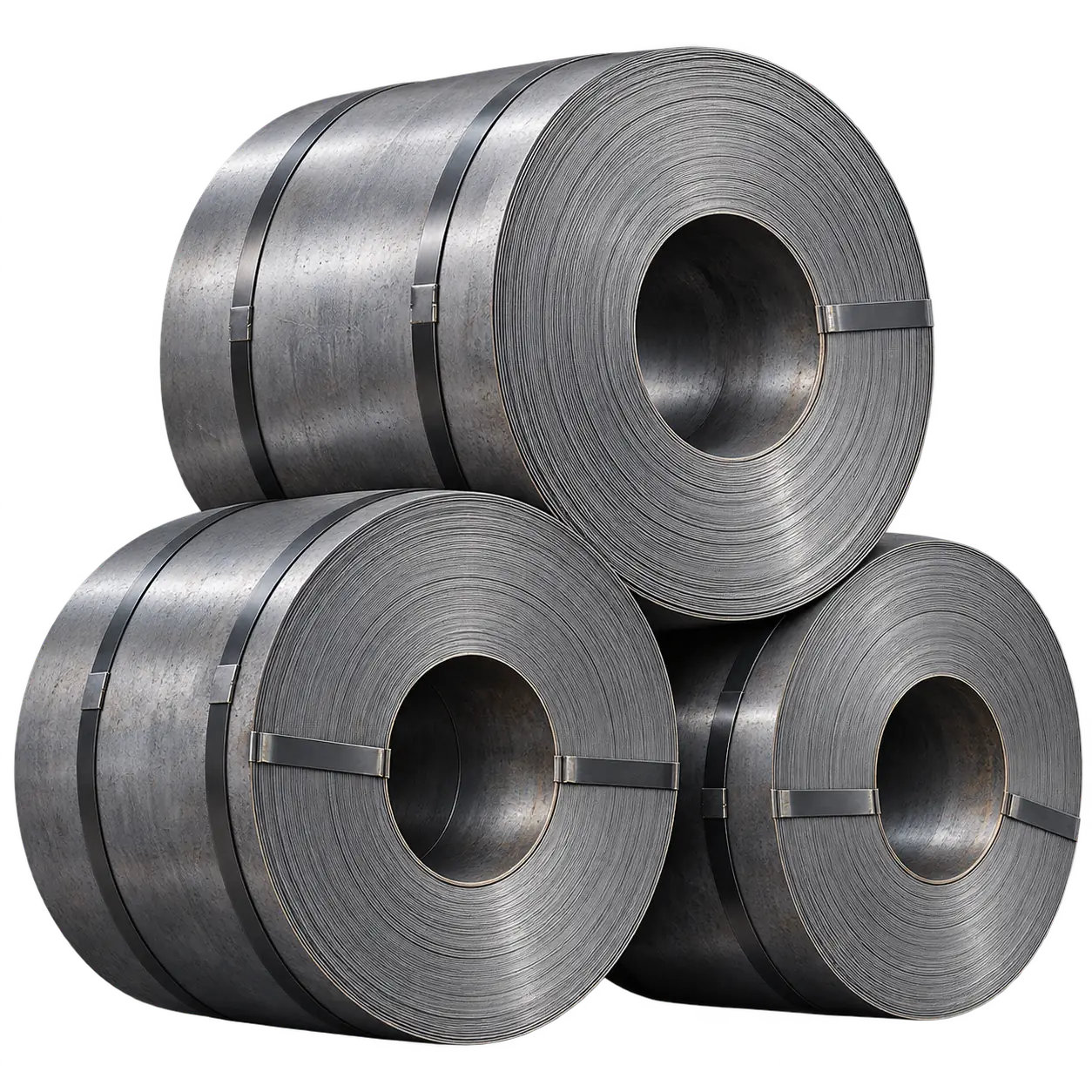
Bobinas laminadas a quente
Espessura: 0,063-0,236 in / 1,6-6 mm · Largura: 36-80 in / 900-2.050 mm
Especificações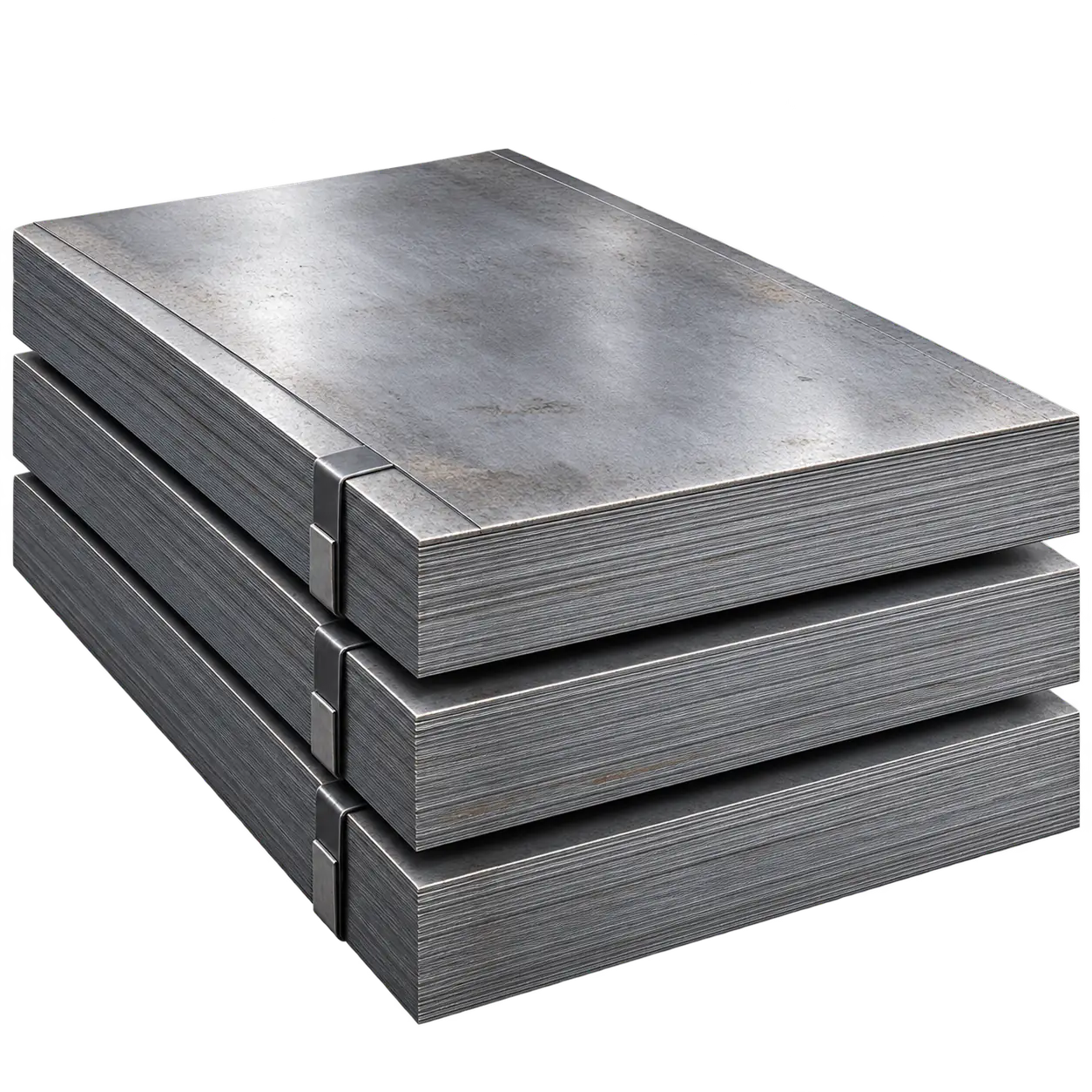
Chapas laminadas a quente
Espessura: 0,063-1 in / 1,6-25 mm · Tamanho da chapa: 48 x 96, 48 x 120, 60 x 120 in / 1.250 x 2.500, 1.250 x 6.300, 1.500 x 6.300 mm
EspecificaçõesKeep reading
Related references
References
Sources
- AA Steel: ASTM A36 chemical and tensile requirements — Plate composition by thickness and tensile requirements.
- AZoM: ASTM A36 Mild/Low Carbon Steel — Older P and S values; mechanical properties.
- Metinvest: S275JR steel grade — Composition and yield/tensile by thickness; legacy equivalents St44-2, Fe430B, 43B.
- Metinvest: S235JR steel grade
- Arvedi: Non-alloyed structural steels as per EN 10025-2 — CEV, elongation, Charpy and the 1.0044 / St 44-2 / Fe 430 B / 43B cross-reference.
- Parker Steel: British Standards and UKCA — Lists BS EN 10025 S275JR against BS 4360 43A/B.
- IS 2062:2011 Hot rolled medium and high tensile structural steel (public copy) — E250 composition and mechanical properties.
- Tata Steel: ASTM A36 equivalent in Indian Standard, IS 2062 E250
- Nippon Steel: product catalogue (JIS G 3101 table) — SS400 P and S limits, yield and tensile.
- Tokyo Metropolitan Government: construction materials specification, JIS G 3101 — SS400 yield by thickness and elongation.
Values summarize published limits and typical data. The governing standard and the current edition control; check them before specifying.